
The Definitive Guide to Architecture Photography: Translating Design into Brand Value
A building's true market value isn't just found in its blueprints or the premium materials used in its construction; it's defined by how the world perceives its story. In a competitive market like the United Arab Emirates, where structural ambition knows no bounds, your visual portfolio is often the first point of contact for high-value investors and global guests. However, many firms find that standard images often fall short, resulting in visuals that look flat, distorted, or simply fail to convey the true scale and luxury of a space. Investing in professional architecture photography is about more than just taking pictures; it's about translating your architectural intent into a tangible brand asset that resonates with your target audience.
We understand that you've poured years of expertise into every curve and corner of your project, and it's frustrating when the final images don't reflect that dedication. This guide will show you how to elevate your property portfolio through technical precision and inspired creative vision. You'll discover the essential elements of a successful shoot, from managing complex production logistics to the meticulous in-house retouching that ensures every frame is a masterpiece. By the end, you'll have a clear roadmap for creating a visual legacy that attracts premium opportunities and showcases your work with the polish it deserves.
Table of Contents
What is Architecture Photography and Why Does it Matter?
Architectural photography is far more than a simple record of a structure's existence. It's a specialized discipline that balances technical accuracy with a deep aesthetic intent. While a standard snapshot might show where a building stands, professional architecture photography reveals why it matters. It captures the interplay of light, the rhythm of structural lines, and the relationship between a building and its environment. In the United Arab Emirates, where the skyline serves as a global benchmark for innovation, these images act as the primary language of design communication.
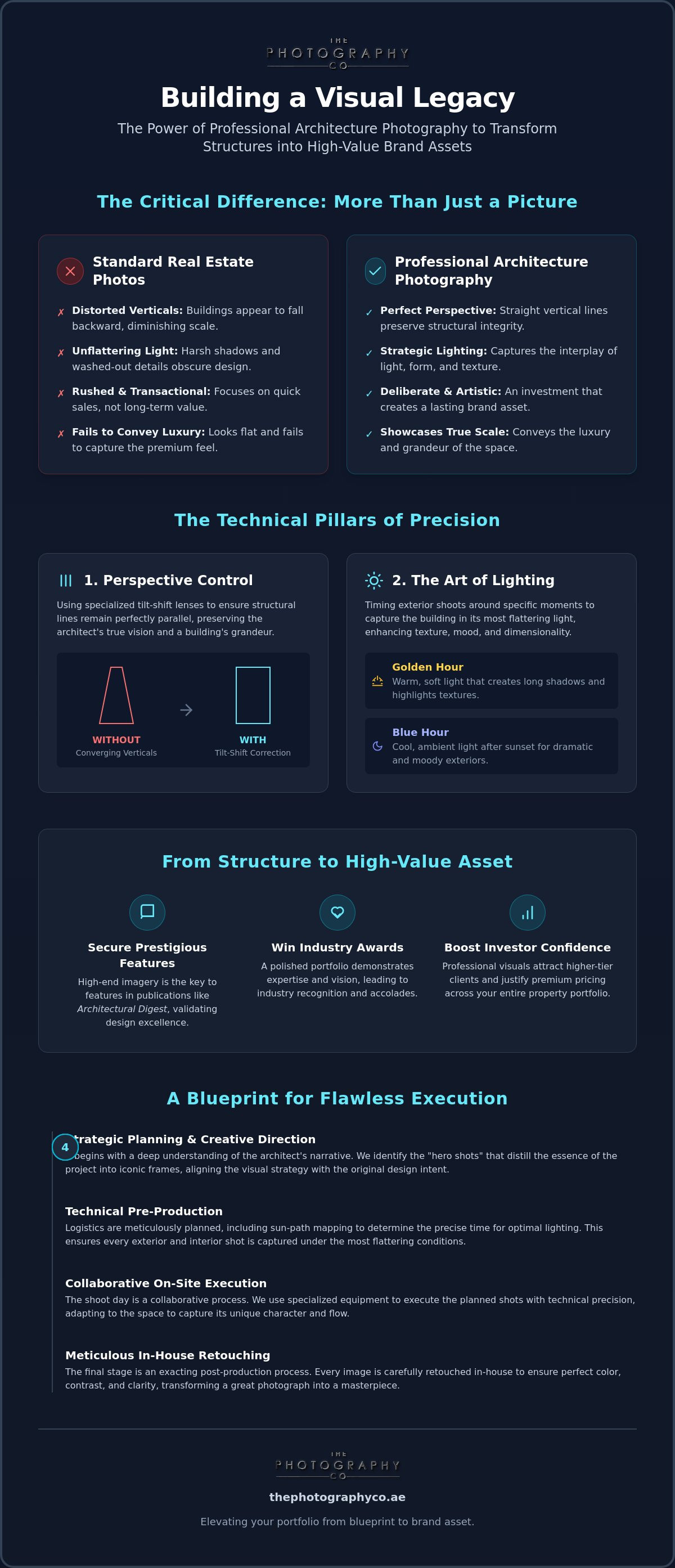
It's vital to distinguish this craft from standard real estate photography. Real estate images are often produced quickly to facilitate a rapid transaction. In contrast, architectural imagery is a deliberate, slow-process investment. It uses specialized equipment to correct perspective and ensures that every vertical line remains perfectly straight. This level of polish transforms a physical space into a compelling brand asset that lives long after the construction dust has settled. For architects and designers, this creates a "visual legacy" that documents their career milestones with the dignity they deserve.
The Commercial Impact of High-End Imagery
High-quality visuals directly influence property valuation and investor confidence. In a market as dynamic as the UAE, premium investors expect a level of sophistication that matches the scale of the development. Professional imagery is the key to:
Securing features in prestigious publications like Architectural Digest or Design Middle East.
Winning industry awards that validate a firm's expertise and structural vision.
Differentiating a brand from competitors through a consistent, high-end visual identity.
When a project is documented with precision, it stops being just a building. It becomes a powerful marketing tool that attracts higher-tier clients and justifies premium pricing across a property portfolio.
Beyond the Lens: The Strategy of Space
Successful photography begins long before the camera is set up. It requires a deep understanding of the architect's narrative. What was the intended flow of the space? How does the light move through the atrium at noon? We focus on capturing "hero shots" that distill the essence of a project into a single, iconic frame. These images are strategically planned to align with the original design intent, ensuring that the final visuals accurately reflect the soul of the architecture. By treating each project as a unique story, we help firms build a portfolio that resonates emotionally with their target audience.
The Technical Pillars of Professional Architectural Imagery
Achieving a world-class architectural image requires far more than a high-resolution sensor. It demands a specialized toolkit and a deep understanding of optical physics. In a landscape defined by soaring heights and intricate geometries, where architectural marvels push the boundaries of design, the technical demands on architecture photography are immense. Without the right approach, even the most stunning designs can appear distorted or diminished. Professional imagery ensures that every line is intentional and every angle is accurate, preserving the architect's vision with absolute fidelity.
Mastering Perspective and Distortion
One of the most common issues in amateur photography is the "converging verticals" effect, where buildings appear to be falling backward. This happens when a camera is tilted upward to capture the top of a structure. Professionals solve this using tilt-shift lenses. Tilt-shift technology allows the photographer to shift the lens independently of the camera body, correcting perspective at the source to maintain structural integrity. This ensures that vertical lines remain perfectly parallel, which is essential for professional portfolios. While wide-angle lenses are necessary to capture expansive interiors, we avoid the unrealistic "fish-eye" look, focusing instead on a natural field of view that reflects how we actually experience a space.
The Art of Lighting: Golden Hour and Beyond
In environments where the harsh midday sun can wash out textures and create unforgiving shadows, we prioritize the "Golden Hour" and "Blue Hour" for exterior shoots. These brief windows provide a soft, directional light that accentuates the form and facade of a building. Managing high-contrast environments often requires advanced techniques like bracketed exposures and HDR processing. By following tips from a professional photographer, we learn to balance this ambient glow with supplemental lighting inside. This approach highlights premium materials like polished marble or brushed steel, ensuring the luxury of the interior is palpable. If you're looking to showcase your next project with this level of detail, our team at The Photography Co can help you plan the perfect shoot.
Composition and the Viewer’s Journey
Technical precision is the foundation, but composition is the soul of the image. We use leading lines and framing to guide the viewer’s eye through a physical space, creating a sense of depth and flow. It's about more than just showing a room; it's about inviting the audience to step into it. By carefully placing furniture or architectural elements within the frame, we create a narrative that emphasizes the functionality and beauty of the design. This methodical approach ensures that every photograph serves as a powerful commercial asset for your brand.
Navigating Commercial, Residential, and Hospitality Sectors
Every architectural project tells a different story, and the lens must adapt to capture that specific narrative. A skyscraper in Dubai International Financial Centre communicates corporate strength and efficiency, while a boutique resort on the coast of Ras Al Khaimah speaks of tranquility and leisure. Successful architecture photography requires a deep understanding of these sectoral nuances. It's not just about the building; it's about the intended purpose of the space and the people who will inhabit it. By tailoring the visual style to the sector, we ensure the final images resonate with the right stakeholders, whether they're looking for a new corporate headquarters or a luxury holiday destination.
While exterior structural shots focus on the "hero" perspective and the building's place in the skyline, interior design photography requires a more intimate approach. It's here where we focus on the tactile quality of materials and the flow of natural light through a room. Adding "lifestyle" elements, such as a carefully placed book or a soft human silhouette, creates an emotional connection that raw structural shots sometimes lack. These subtle touches bridge the gap between cold engineering and living design. Finally, we consider the end platform for these visuals. High-resolution files for print awards require different considerations than punchy, high-contrast edits designed to stop the scroll on social media.
Hospitality and Resort Photography
In the hospitality sector, the goal is to sell an experience rather than just a room. We capture the "guest journey" by blending wide vistas of the property with intimate detail shots of luxury finishes. In the UAE, resort projects often feature a complex synergy between architecture and landscape. We highlight how the structure interacts with pools, gardens, and the natural environment to drive bookings. Every shot is styled to emphasize the premium amenities that set a property apart in a crowded market.
Corporate and Industrial Developments
For business hubs and industrial projects, the focus shifts toward scale, modernity, and innovation. We emphasize clean lines and organized layouts to convey efficiency. With the UAE’s focus on sustainability, we often highlight LEED-certified features and green building technologies. Photography in these sectors often visualizes the "future of work," showcasing collaborative zones and flexible spaces that attract forward-thinking tenants. It's about demonstrating that a building isn't just a place to work, but a strategic asset for a company's growth.
The Production Workflow: From Vision to Final Delivery
A world-class image is never a matter of chance. It's the result of a methodical, end-to-end production process that begins weeks before the first frame is captured. For large-scale projects across the United Arab Emirates, managing the logistical complexities of a shoot requires a partner who acts as both a visionary artist and a meticulous project manager. At The Photography Co, we've refined this workflow over 12 years and 18,000+ successful client projects. Our full-service approach ensures that every detail, from the initial creative direction to the final pixel, aligns with your brand's commercial goals.
The shoot day itself is a deeply collaborative experience. We work alongside architects, interior designers, and site managers to ensure the structural intent is translated accurately through the lens. It's a dynamic environment where we manage supplemental lighting, physical staging, and composition in real-time. By handling the complexities of production, we allow our clients to focus on the creative vision while we secure the technical results.
Pre-Production and Creative Direction
Successful architecture photography starts with a comprehensive creative consultation. we develop a structured shot list that balances expansive "hero" images with intimate detail shots of premium materials. This phase involves rigorous site readiness checks, including staging furniture and ensuring temporary construction elements are cleared. By conducting a detailed sun-path analysis, we determine the exact hour when natural light will best accentuate the building's facade, ensuring we're on-site at the optimal moment for every exterior angle. This level of planning is what separates a standard photo from a commercial asset.
Post-Production and High-End Retouching
If the shoot is the foundation, post-production is the architecture itself. Often called the "invisible art," this phase accounts for nearly 50% of the final result. Our in-house team of retouchers meticulously cleans each frame, removing unavoidable distractions like power lines, stray reflections, or temporary site signage that can clutter a professional portfolio. We use advanced digital compositing to create perfect window views, balancing interior and exterior exposures flawlessly. Finally, bespoke colour grading ensures brand consistency across your national portfolio, whether the property is a corporate hub in Dubai or a luxury resort in Abu Dhabi.
Ready to document your next structural milestone with a team that manages every detail from planning to delivery? Partner with our production experts to bring your architectural vision to life with professional precision.
Partnering with The Photography Co for Your Next Project
When documenting the United Arab Emirates’ most iconic structures, experience isn't just an advantage; it’s a necessity. We have spent over 12 years refining the art of architecture photography, working with over 18,000 clients to translate physical designs into powerful commercial assets. This extensive history allows us to understand the unique lighting conditions and structural ambitions of the region. Whether you're showcasing a private residential villa or a landmark skyscraper, we bring a seasoned perspective that ensures your project is captured with the polish and importance it deserves.
Choosing a partner who understands the weight of a design is essential for building a lasting brand legacy. Our team treats every subject with the rigor of a meticulous project manager and the vision of a seasoned artist. We invite you to explore our portfolio of successful projects, which stands as a testament to our commitment to quality and our ability to manage the complexities of large-scale productions across the nation.
A Full-Service Creative Experience
Our studio provides a seamless, end-to-end creative journey that removes the logistical weight from your shoulders. Because we maintain an in-house team for both creative direction and technical retouching, we guarantee a level of consistency that external contractors often struggle to match. This integrated approach allows us to deliver results that are both comprehensive and refined. We provide:
Strategic creative direction that aligns with your architectural intent.
Scalable solutions for everything from boutique interior designs to massive commercial developments.
Meticulous in-house retouching that ensures a polished, high-end finish for every frame.
We act as your dedicated creative partner, managing the complexities of production so you don't have to. This steady, all-encompassing resource ensures that the final product is not just a photograph, but a long-term marketing tool for your firm.
Securing Your Visual Assets for 2026
As we look toward the project completion dates of 2026, securing your visual assets early is a strategic move for any marketing team. The UAE’s seasonal lighting and rapid construction cycles mean that the window for the perfect "hero shot" can be remarkably brief. Booking your shoot well in advance ensures that we can map the sun-path and stage the site during the optimal weather conditions. Our streamlined process is designed to reduce the burden on project managers, providing a transparent and methodical workflow that delivers results on time. Consult with our experts on your architecture photography needs to ensure your next structural milestone is documented with professional precision.
Building Your Architectural Legacy Through Visionary Imagery
Professional architecture photography is the definitive bridge between your structural achievements and the investors or guests you aim to attract. We've examined how technical rigor, such as perspective correction and sun-path mapping, ensures your designs are represented with absolute fidelity. By adapting your visual strategy to the specific needs of the UAE's hospitality or corporate sectors, you transform a physical site into an evocative brand story. This process requires a partner who understands both the artistic soul of a building and the meticulous demands of commercial production.
With 12+ years of expertise and a track record of 18,000+ happy clients, The Photography Co provides a steady, all-encompassing resource for your firm. Our in-house retouching team manages the final polish so you don't have to, ensuring every image reflects the premium quality of your work. Elevate your brand with professional architecture photography and secure a visual portfolio that stands the test of time. We’re excited to help you translate your next grand design into lasting commercial value.
Frequently Asked Questions
What is the best time of day for architecture photography?
The optimal times for exterior architecture photography are the "Golden Hour" and "Blue Hour." In the United Arab Emirates, the midday sun is often too harsh, creating deep shadows that obscure structural details. By shooting during the soft light of dawn or dusk, we accentuate the building's form and facade. This timing is essential for capturing the interplay of natural and artificial lighting, especially for the nation's glass-heavy skyscrapers.
How long does a typical professional architectural photoshoot take?
A professional architectural photoshoot typically requires a full day, though large-scale commercial developments may take several days to document fully. We prioritize quality over speed, ensuring we have the time to track the sun's movement and adjust lighting for each "hero" shot. This methodical pace allows us to capture both the expansive structural vistas and the intimate design details that define your brand’s physical presence.
Do I need to hire a separate stylist for interior photography?
While not strictly mandatory, hiring a professional stylist can significantly elevate the final results of interior photography. A stylist ensures that every piece of furniture and decor is perfectly positioned to guide the viewer's eye. Our team provides creative direction to help with basic staging, but for flagship hospitality or luxury residential projects, a dedicated stylist adds that final layer of polish that resonates with premium investors.
What is the difference between architecture and real estate photography?
The primary difference lies in the intent and technical execution. Real estate photography is designed for rapid property turnover and is produced quickly. Architecture photography, however, is a deliberate investment in your brand’s visual legacy. It uses specialized tilt-shift lenses to preserve structural integrity and involves extensive post-production. It's intended for portfolios, award entries, and long-term marketing rather than a one-time sale.
How many images should I expect from a one-day shoot?
For a standard one-day shoot, you should expect approximately 10 to 15 fully finished, high-end images. Because we focus on technical precision and perfect lighting for each frame, we prioritize the "hero" shots that will drive your commercial value. This volume ensures that every photograph in your portfolio is a masterpiece, rather than delivering dozens of average images that fail to convey the scale of your project.
Why is professional retouching necessary for building photos?
Professional retouching is essential for correcting optical distortions and removing unavoidable site distractions. Even the most pristine locations have power lines, reflections, or temporary signage that can clutter a frame. Our in-house team uses digital compositing to ensure window views are clear and interior lighting is perfectly balanced. This process is what transforms a raw capture into a polished, commercial-grade asset for your brand.
Can you handle large-scale commercial projects across the entire country?
Yes, we provide comprehensive photography coverage for large-scale commercial and residential projects across the entire United Arab Emirates. Whether your development is located in the heart of Dubai, the industrial zones of Abu Dhabi, or the coastal resorts of the Northern Emirates, our team is equipped to manage the logistics of national production. We've spent 12 years documenting the country's diverse structural landscape for over 18,000 clients.
How far in advance should I book an architectural photographer?
We recommend booking your session at least two to four weeks in advance to ensure optimal scheduling. This lead time is particularly important if you're targeting specific seasonal lighting or have a strict project completion deadline. Early booking allows our team to conduct site visits and sun-path mapping, ensuring that every logistical detail is managed before we arrive on-site for the first shutter click.


Comments